What it is
A riso zine of the classic cocktails I drank in New York. One spread per drink: the name, the bar, the address, and what it actually tasted like.
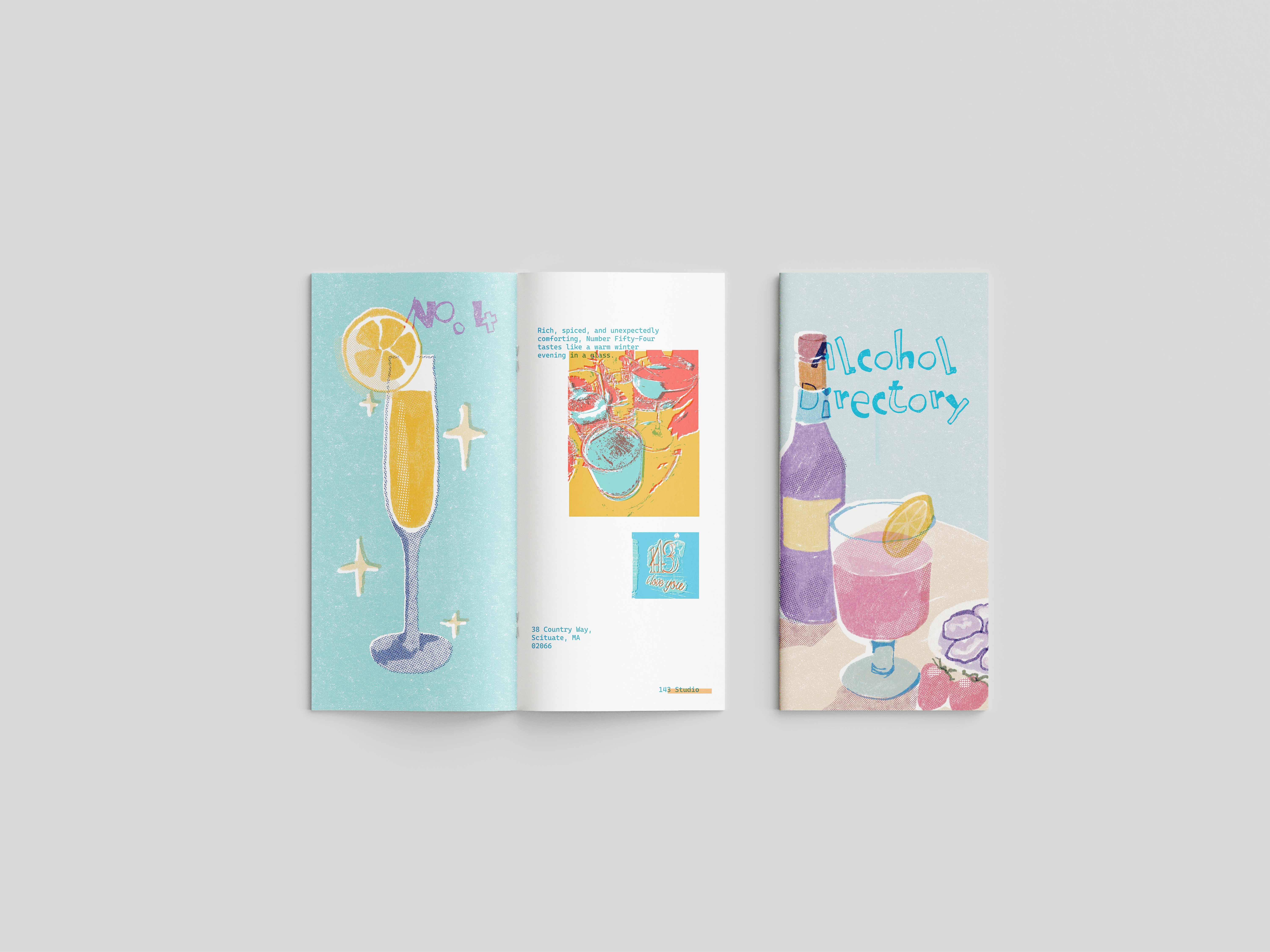
A riso zine of the cocktails I drank in New York. One spread per drink: what it was, where I had it, and what it tasted like.
The Book
All 24 spreads. Click either half of the book to turn a page, or use the arrow keys. Open it at full size to read the tasting notes.
The Idea
What it is
A riso zine of the classic cocktails I drank in New York. One spread per drink: the name, the bar, the address, and what it actually tasted like.
Who it is for
People who go out for the room as much as the drink. It works as a keepsake, and the map at the back means the route can be walked again.
Why I made it
I kept taking photos in bars and forgetting the drinks. I wanted a way to record taste and mood, and I had been wanting to design something for riso.
Direction
The moodboard was mostly riso printing and illustrated food books. What I took from it was less a look than three things I was not allowed to break.
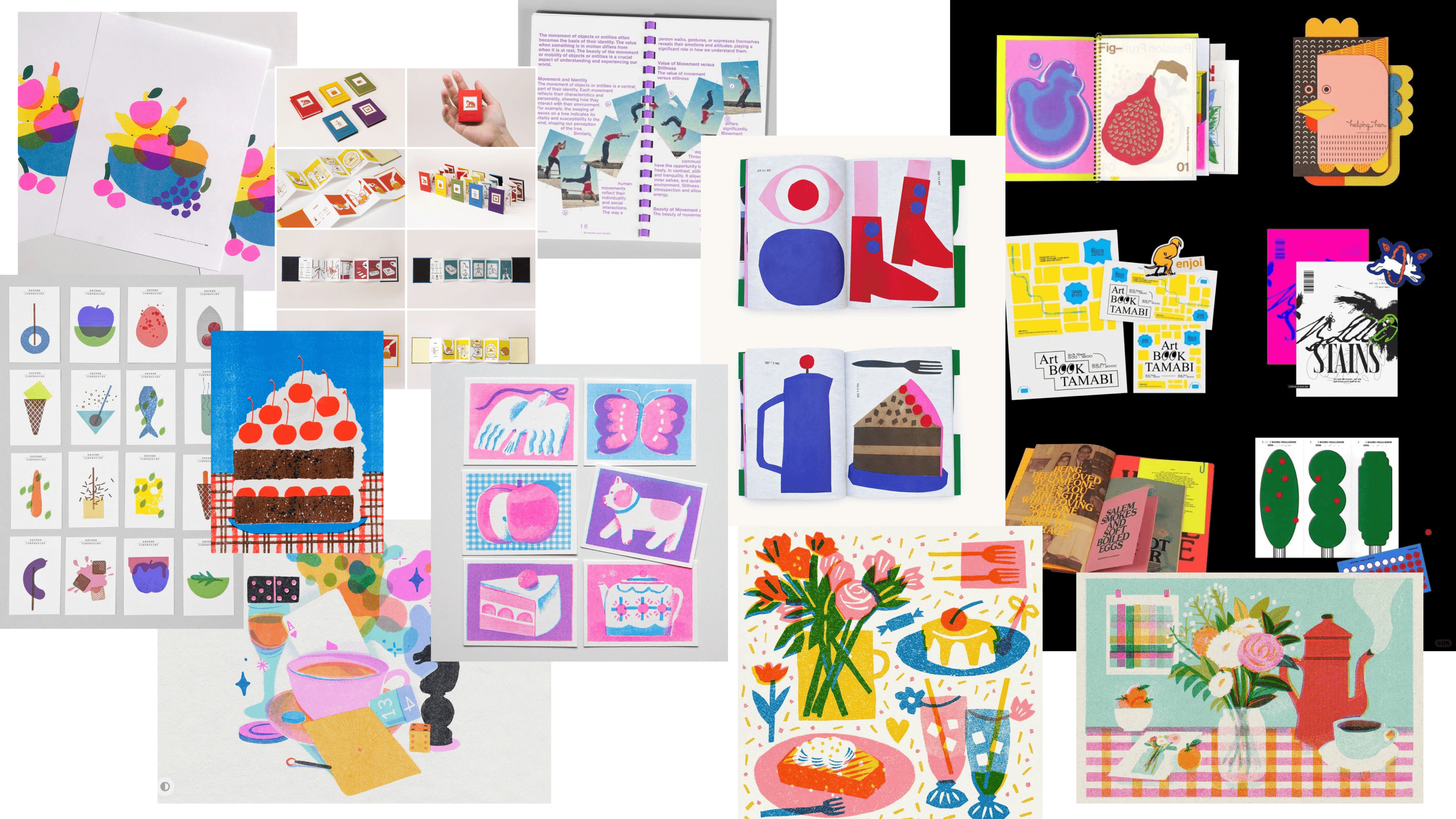
Flat spot colors, visible halftone, paper grain, and the small misregistration riso gives you. None of it is cleaned up afterwards.
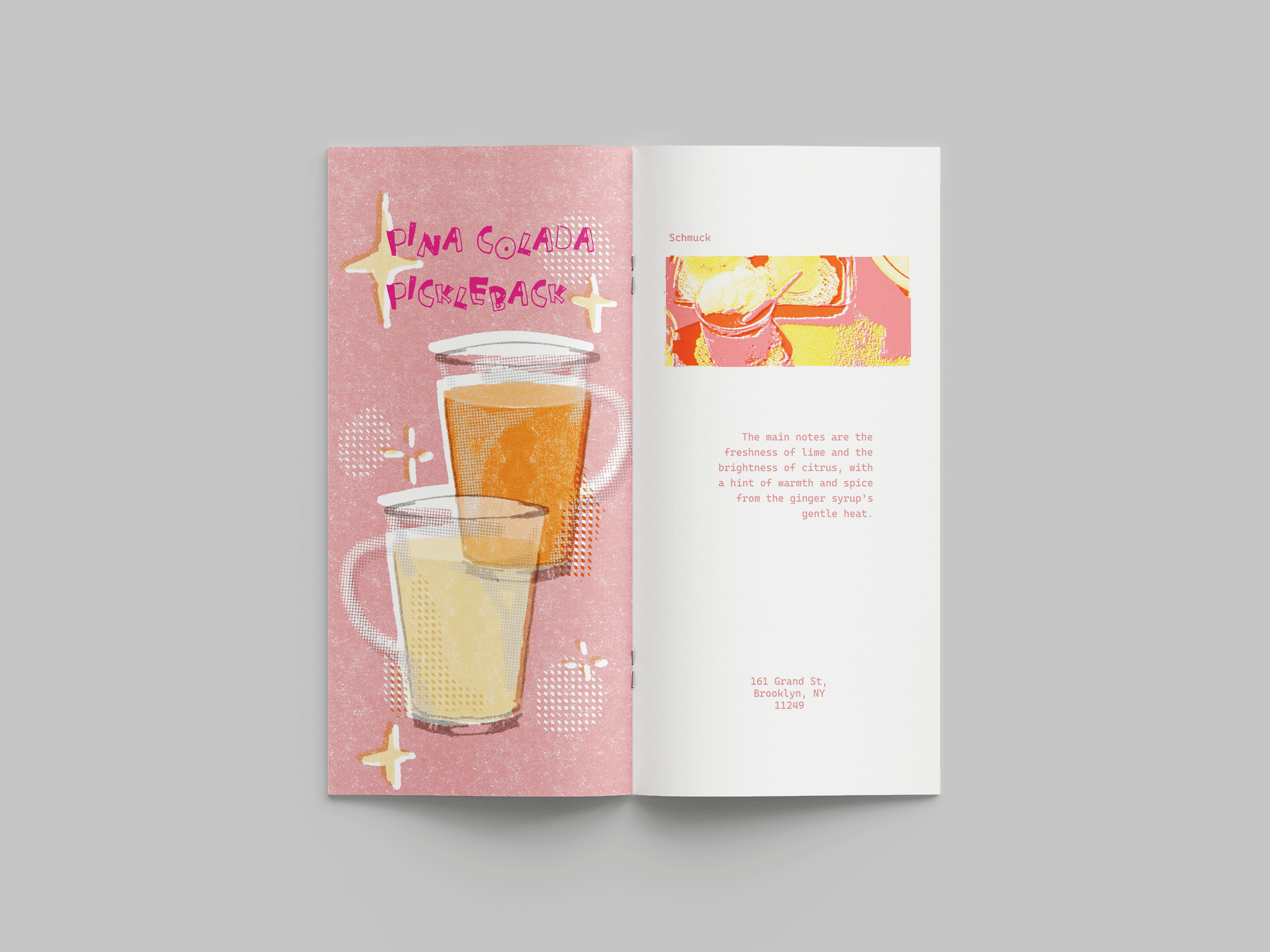
The cocktail is illustrated and the bar is a photo. The drawing carries how it felt; the photo is the evidence I was there.
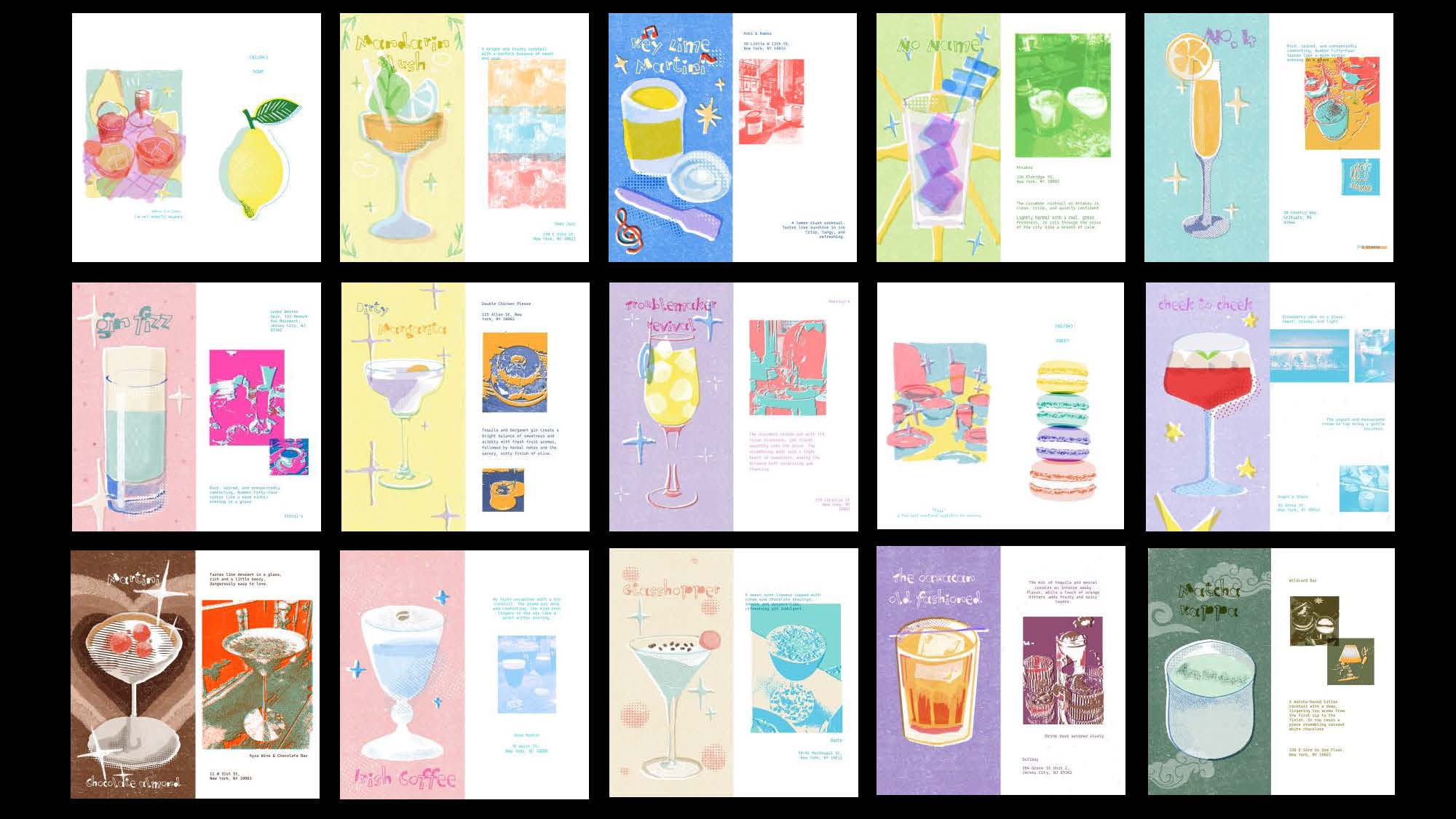
Each spread is keyed to the color of its own cocktail. There is no fixed palette to pull from, so no two spreads sit on the same ground.
Highlights
01 / Made by hand
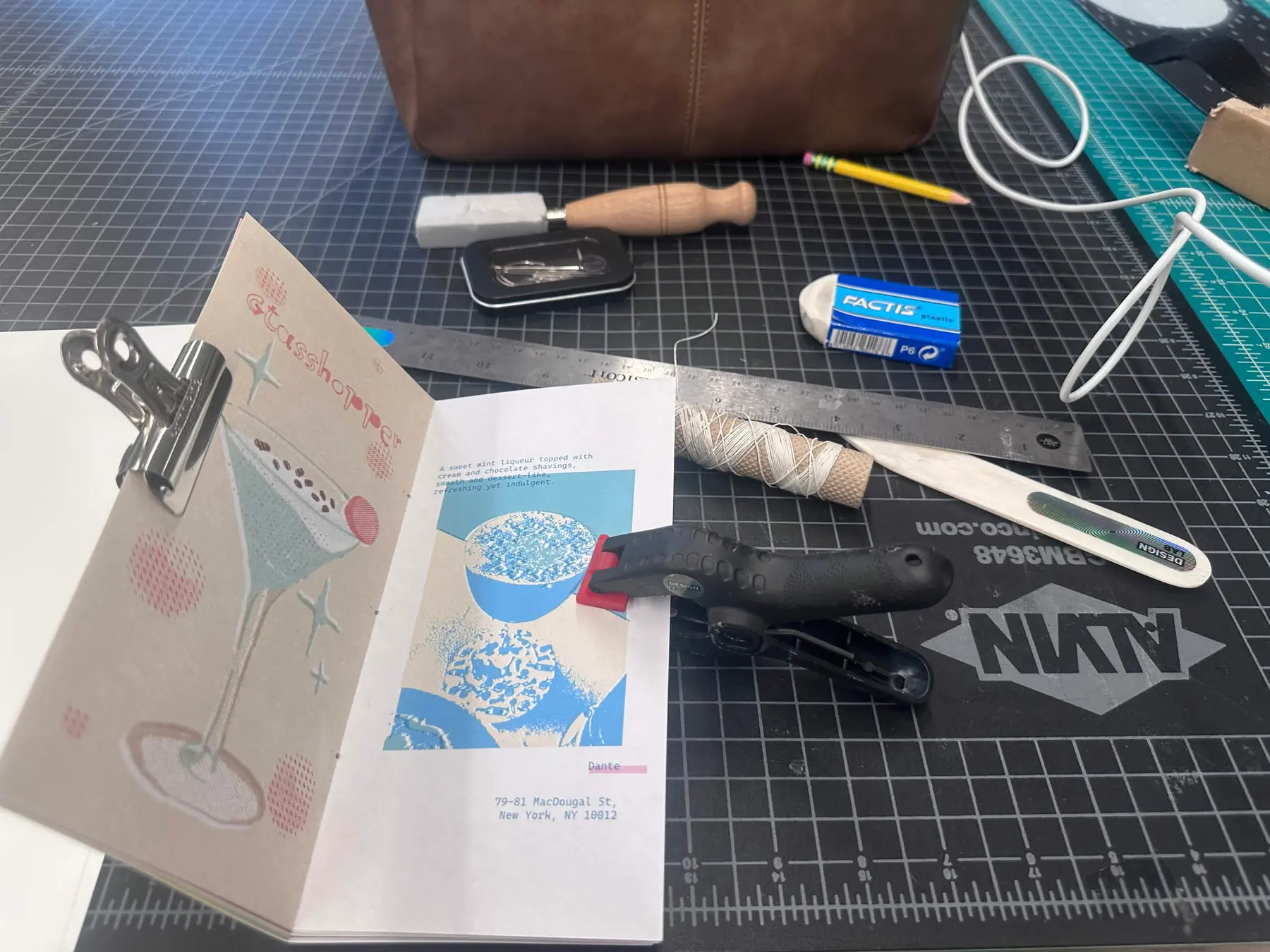
The whole book is printed on a risograph and bound by hand. The halftones are ink on paper rather than a filter, the registration drifts a little on some spreads, and the drink name on every left-hand page is hand-lettered — no two are drawn the same way.
02 / All of it first-hand
Nothing is researched. Each spread is a bar I went to and a cocktail I ordered, and the tasting note is what I thought of it rather than what the menu said.
The bar names and addresses are real, so the book works as a route as much as a record. The map at the back lets you walk the whole thing.
03 / My own photos
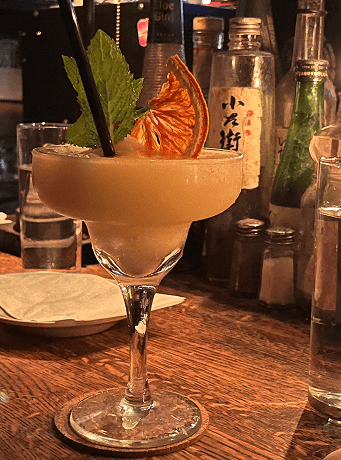
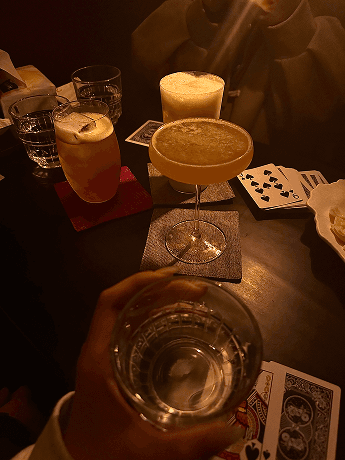
The source photos are phone shots taken at the bar, usually in bad light. Separating them into two or three flat colors throws away most of the detail and keeps the shape and the mood, which is closer to what I remember of a night than the original file is.
It also means a badly lit photo stops being a problem. Half the shots in the book would not survive being printed straight.
04 / Ordered by taste
The book follows the taste profiles of the drinks rather than where or when I had them. It opens on the refreshing ones and moves toward the concentrated and strong, which is roughly the shape of an evening out. Sorting by neighbourhood or by date would have been easier to build and would have told a reader nothing.
Chapter 00
Introduces the book and the visual approach, which comes out of the riso tradition of drawn design.
Body
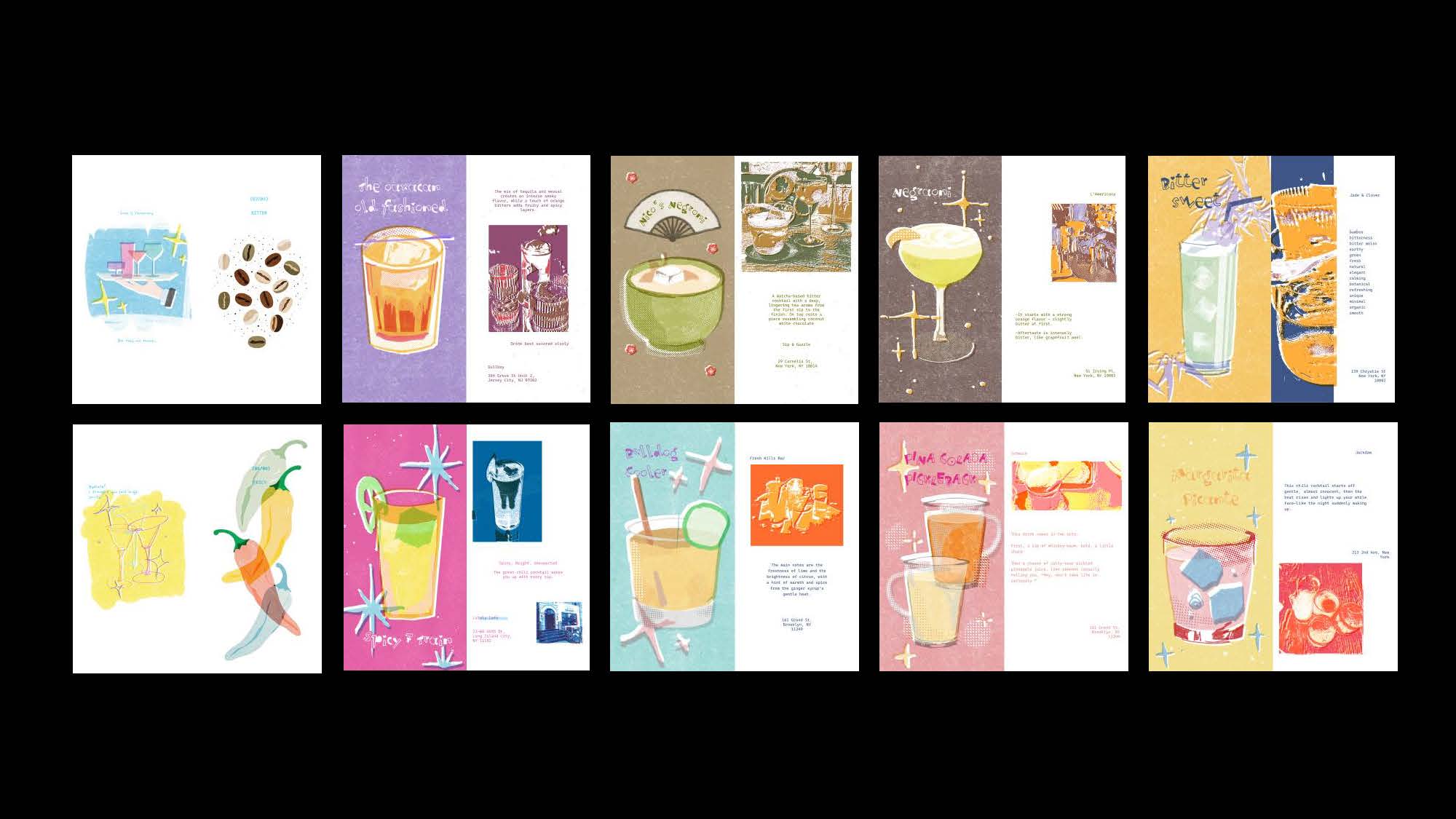
One chapter per taste. Every drink gets its name, the bar and address, a note on the taste and the room, my own photographs, and an illustration for the mood.
Ending
Afterthoughts on the nights in the book, plus a map of every bar so the route can be retraced.
Format
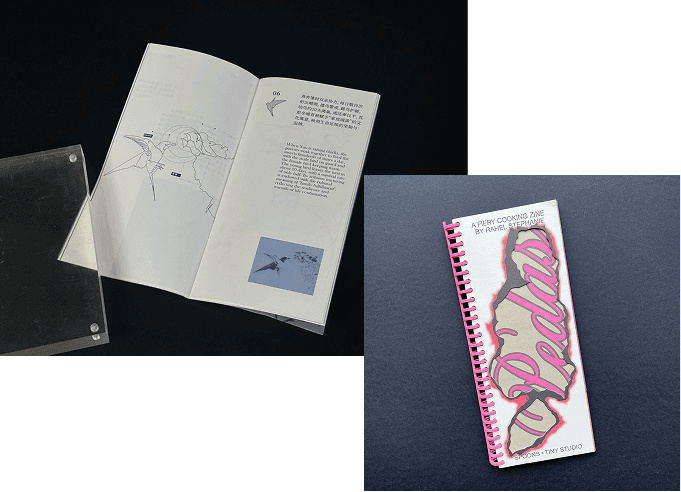
10 × 20 cm is close to a bar menu, and the tall portrait page suits a glass better than a square would. It is sewn rather than coiled, so the left-hand page can run full bleed.
Posters
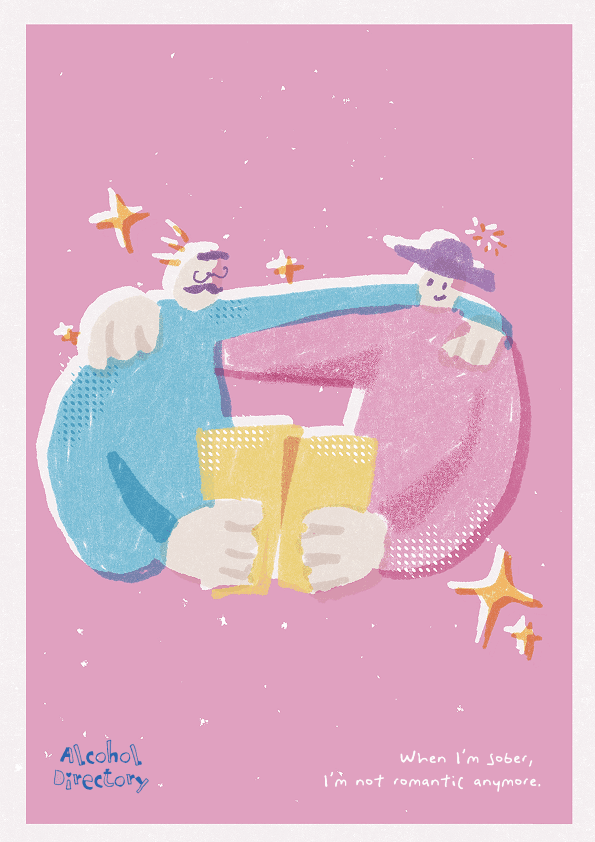
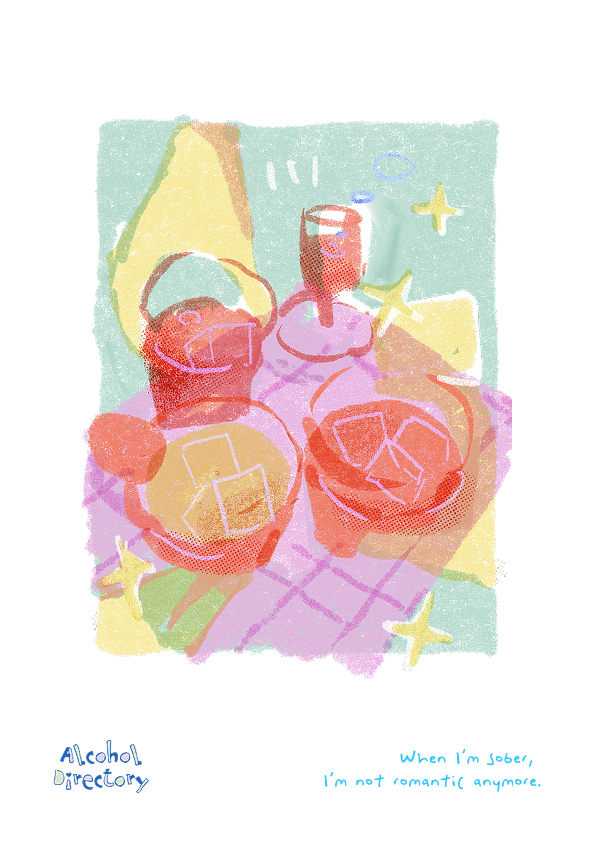
Two promo posters use the drawing style from the book but drop the information layer, so the line has to carry it on its own.
Every Spread
Laid out together, the template holds and the color still changes on every drink. Each taste chapter opens on its own divider.
Reflection
Limitation
Hand-sewing caps it at a handful of copies. Anything past that needs a binding I have not worked out yet, and most of the cheap ones cut into the left-hand page.
Tradeoff
Sorting by taste makes the book good to read straight through and bad to use as a reference. To find one bar you have to remember what you drank there.
Next
The map at the back wants to be a fold-out insert rather than a page, so it can come out of the book and go in a pocket on the way to the first bar.