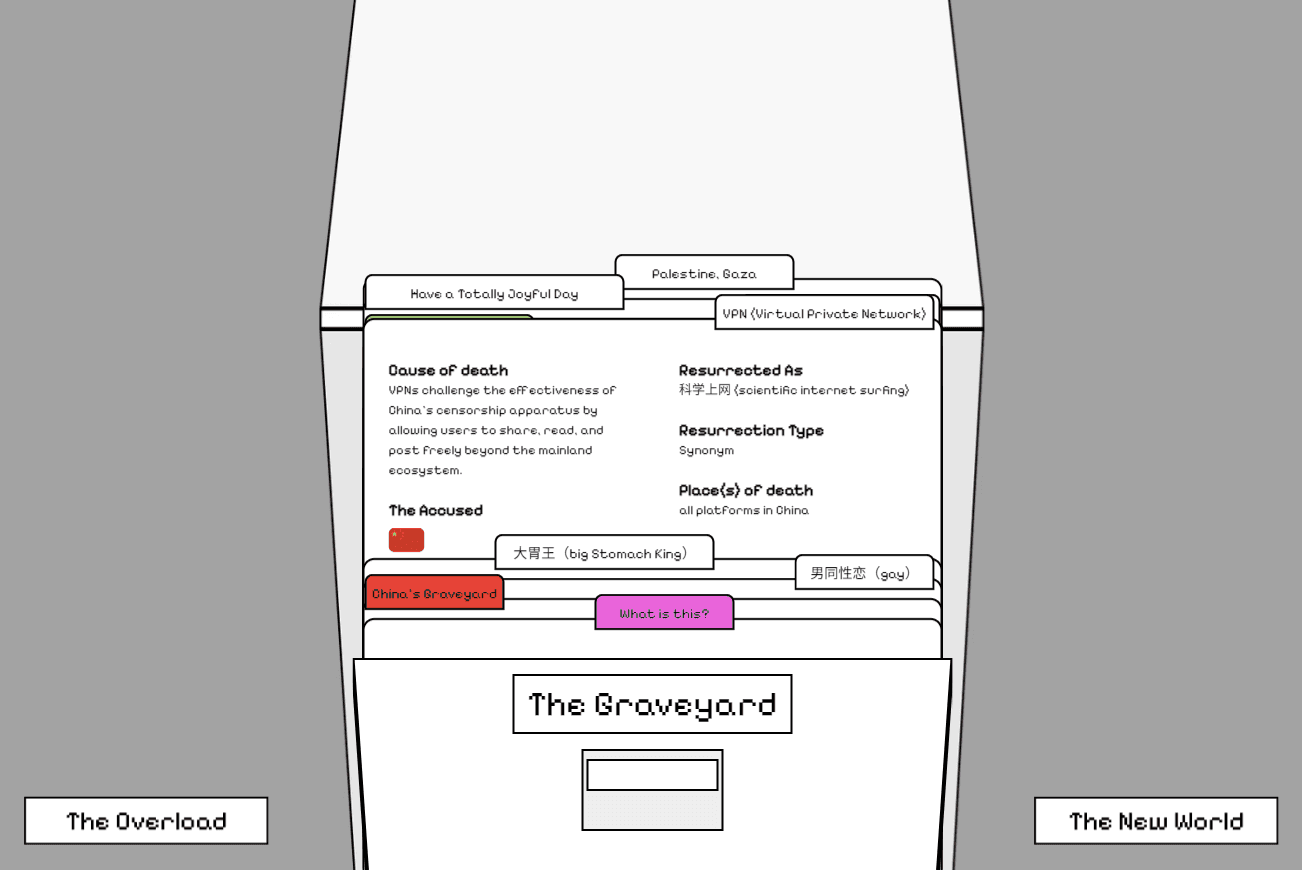
Graveyard
An interactive archive that visualizes how censored language adapts, survives, and carries cultural memory.
- The problem
- Digital censorship can erase language while leaving its social and political traces unseen.
- What I did
- Research, information architecture, visual design, and web prototyping.
- The outcome
- A digital memorial where altered words become evidence of creativity and resistance.
Graveyard
The project visualizes this evolving relationship between language, censorship, and resistance across different cultures. By collecting, categorizing, and reanimating these lost or altered words, Graveyard transforms digital silence into a space of memory and reflection — asking how speech, politics, and creativity coexist in an era of algorithmic control.
Current problem
Censored Language in the Digital Age
In today’s digital world, language is no longer completely free. Many words have been banned or restricted on the internet, especially on social media platforms. To continue expressing ideas and emotions, people have started to create new ways of communication—using alternative spellings, homophones, symbols, or visual metaphors to replace the censored words. This constant adaptation shows how language evolves under control and how users resist silence through creativity. “Graveyard” explores this phenomenon by collecting and visualizing these “dead” or hidden words, revealing how censorship shapes online expression and cultural memory.
Research
What We Can’t Say
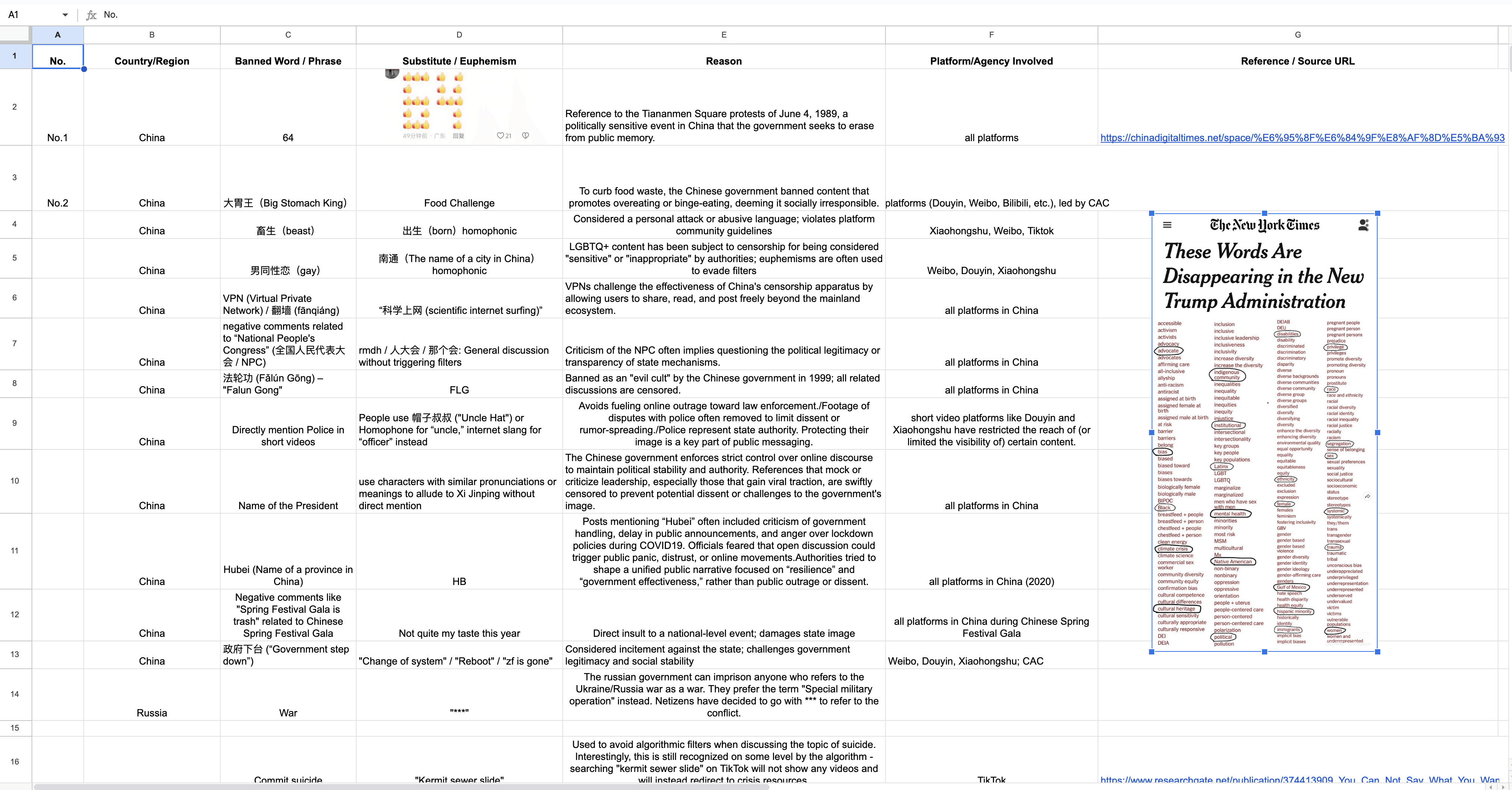
Our research investigates how censorship transforms online language across different countries. By collecting examples of banned or restricted words, we trace how people adapt their expression to survive within controlled digital environments.
In China, users replace sensitive terms with homophones, emojis, or coded slang to evade platform filters. Words like 64, VPN, or President’s name are replaced with phonetically similar phrases or abbreviations. In other regions, such as Russia or the U.S., political and cultural keywords are quietly removed or shadow-banned from public discourse.
Through these substitutions, language becomes a living archive of resistance — a creative system that reveals both constraint and agency. Graveyard visualizes this phenomenon as a digital memorial, where “dead” words are not forgotten but reborn through adaptation, reflecting how censorship shapes the evolution of culture and communication online.
Concept
Introduction
Graveyard is an interactive research-based platform that explores how censorship reshapes online language. In the digital world, many words have been banned, hidden, or replaced by algorithmic systems that decide what can be said. Yet people continue to resist — inventing new forms of expression through homophones, emojis, symbols, and codes. These “buried” words form a linguistic graveyard where meaning survives through disguise.
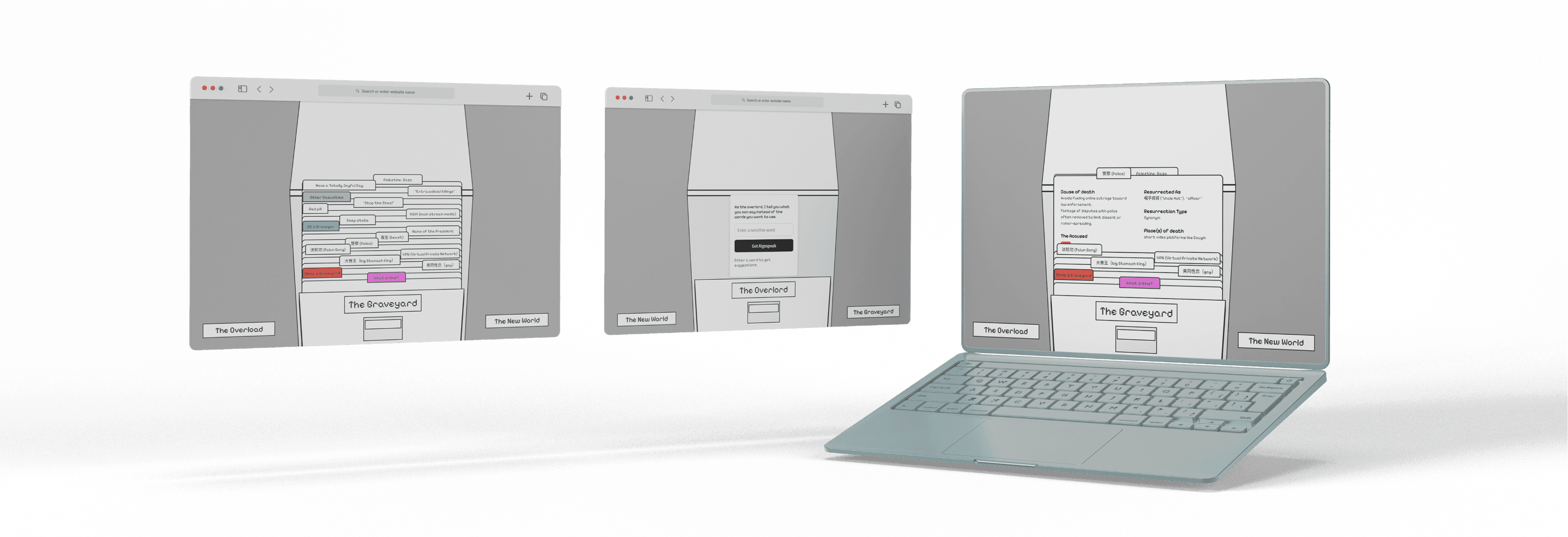
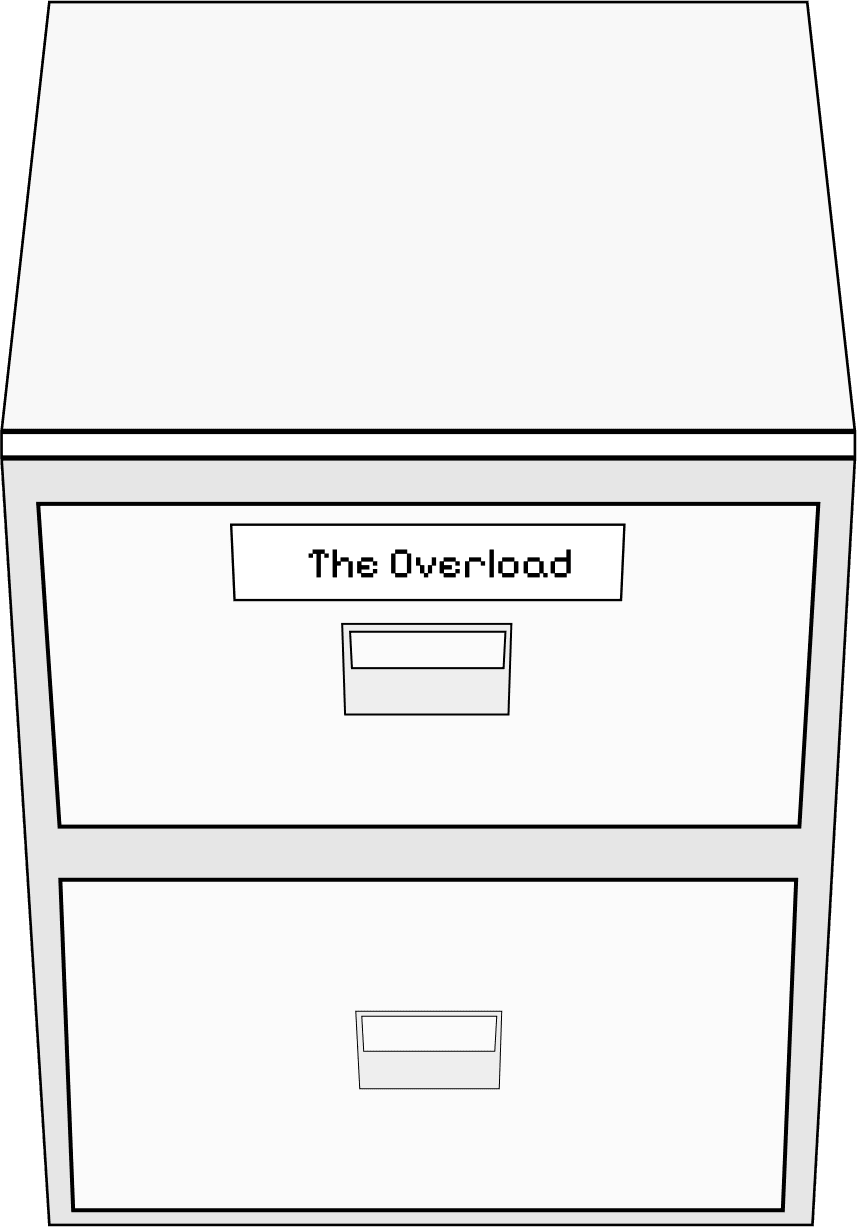
The website is designed as a digital archive rather than a traditional database. Inspired by the structure of filing cabinets, information is organized into drawers that group censored words by different themes, regions, or platforms.
The interaction is intentionally simple and intuitive. Each drawer acts as an entry point into a collection of archived words. Opening a drawer reveals original terms, alternative expressions, contextual information, and related references.
By navigating between drawers, users can compare how similar ideas evolve across different cultures and digital environments.
Experience
Information Architecture
The website organizes information through a filing cabinet metaphor. Each drawer contains a collection of related words, allowing users to navigate naturally between different topics instead of following a linear reading experience. Browsing the archive is designed to feel like uncovering forgotten records. Opening each drawer reveals original words, substituted expressions, and supporting references, encouraging users to compare how language changes across different regions and platforms.
Interactions remain intentionally simple. Users select a drawer, explore the archived entries, and continue navigating through related content. The interface avoids unnecessary complexity, allowing the archive itself to become the focus of the experience.
Visual design
Design System
The interface references archival systems through structured layouts, restrained typography, and generous white space. The minimal visual style allows the content to remain the primary focus while reinforcing the idea of digital preservation.
Consistent typography, spacing, and interaction patterns create a unified browsing experience. Every visual element supports readability and encourages users to focus on the archived language rather than decorative graphics.