What is Suglar?
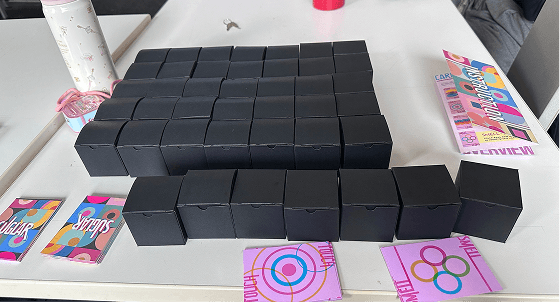
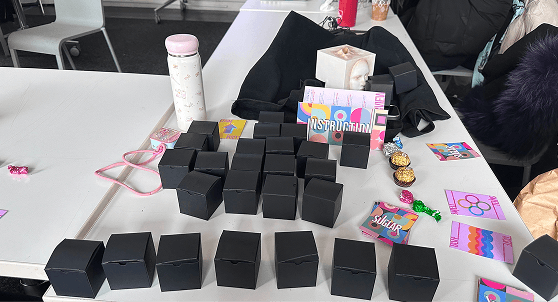
A 2–4 player board game made out of real candy. Every piece on the table is edible and hidden inside an identical opaque box, so a turn is spent working out what you are about to eat rather than looking at it.
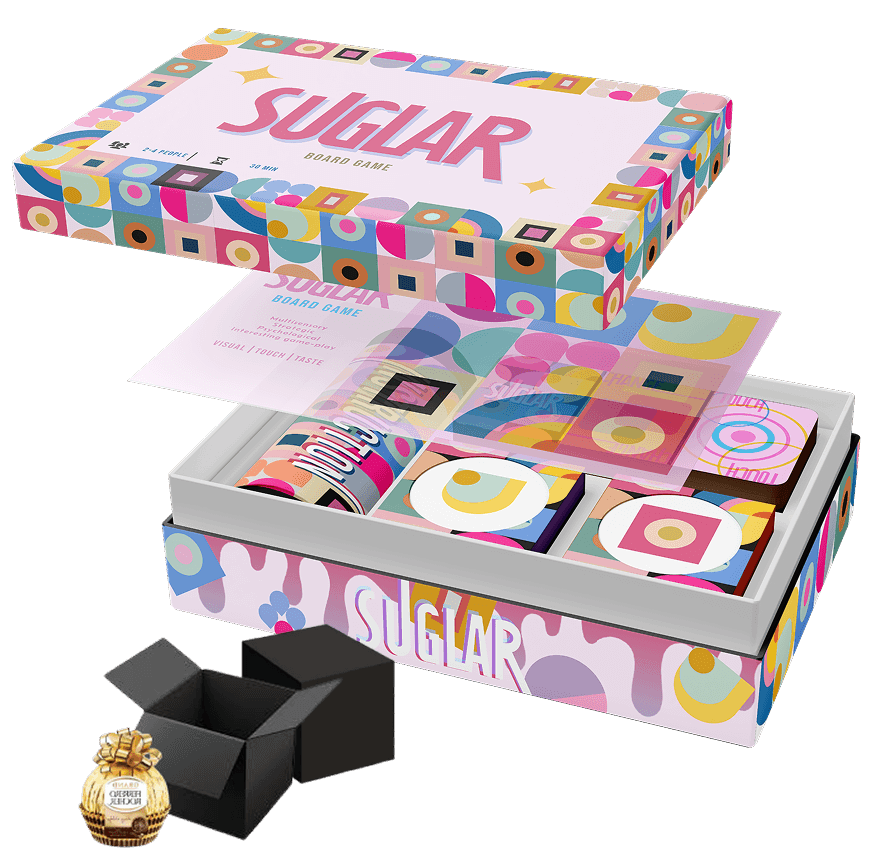
A candy board game you play with your hands and your nose. You lose by eating too much.
Final Product
The Idea
What is Suglar?
A 2–4 player board game made out of real candy. Every piece on the table is edible and hidden inside an identical opaque box, so a turn is spent working out what you are about to eat rather than looking at it.
Who is it for?
People who like party games and sensory play more than rule-heavy strategy — and anyone who has ever picked a chocolate out of an assorted box by feel and hoped for the best.
Why build it?
The research behind the brief kept turning up games with a rich concept and thin play. I wanted the concept to be the mechanic: if the game is about candy, then candy has to be the thing you physically handle.
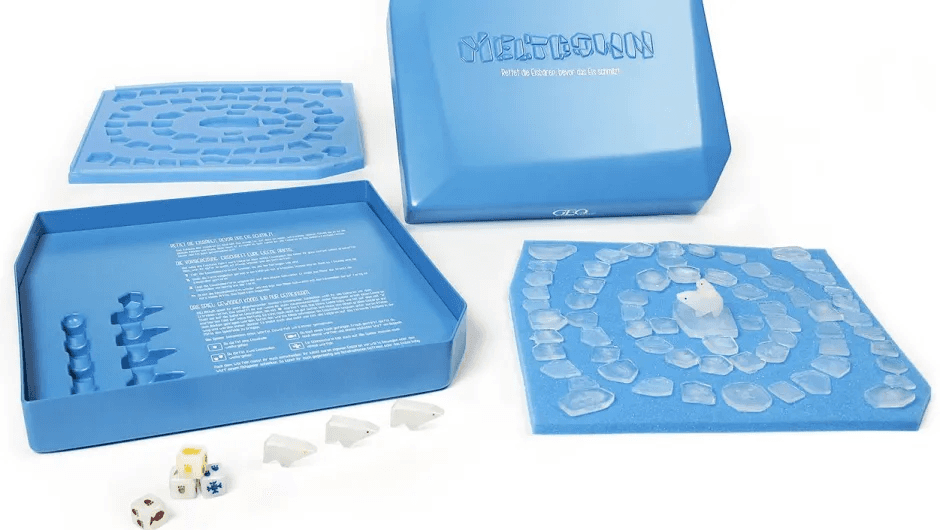
Cooperative · Consumable component
A climate-crisis board game played around real ice cubes. The ice melts through the session, shifting the board and running down the clock at the same time.
A component that is used up can carry a game’s meaning better than a rule can state it.
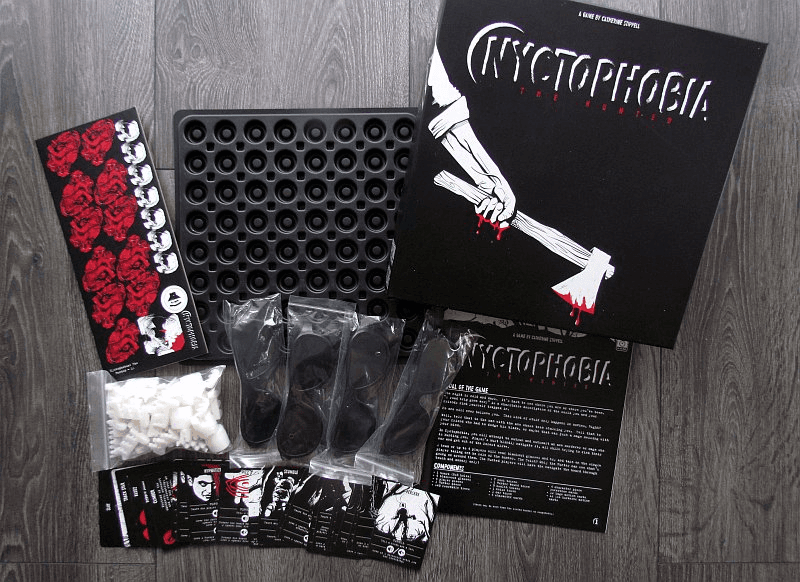
Asymmetric · Tactile · Blackout
Three to six players, one of whom can see. The rest wear blackout glasses and navigate an 8×8 maze of obstacles by touch, memory, and talking to each other.
Take a sense away and the remaining ones become the game. Suglar takes sight off the pieces rather than off the players.
Key Design Decisions
Each one came out of a playtest that failed in a specific way, and each one is printed on a card rather than explained in a manual.
01 / Core mechanic
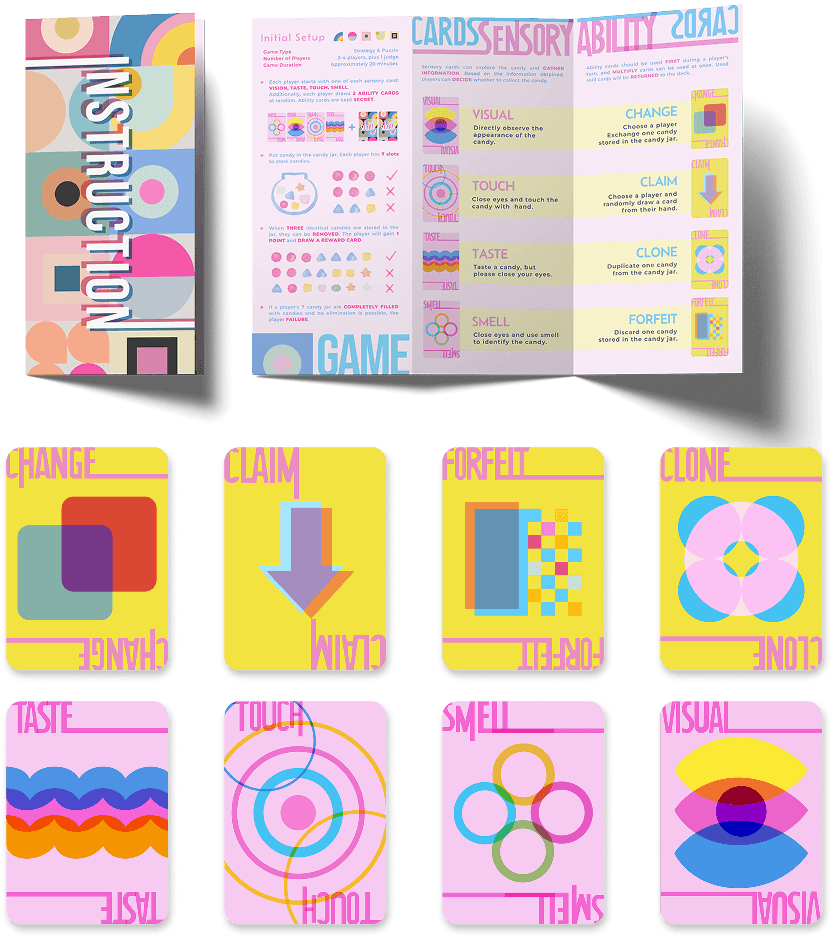
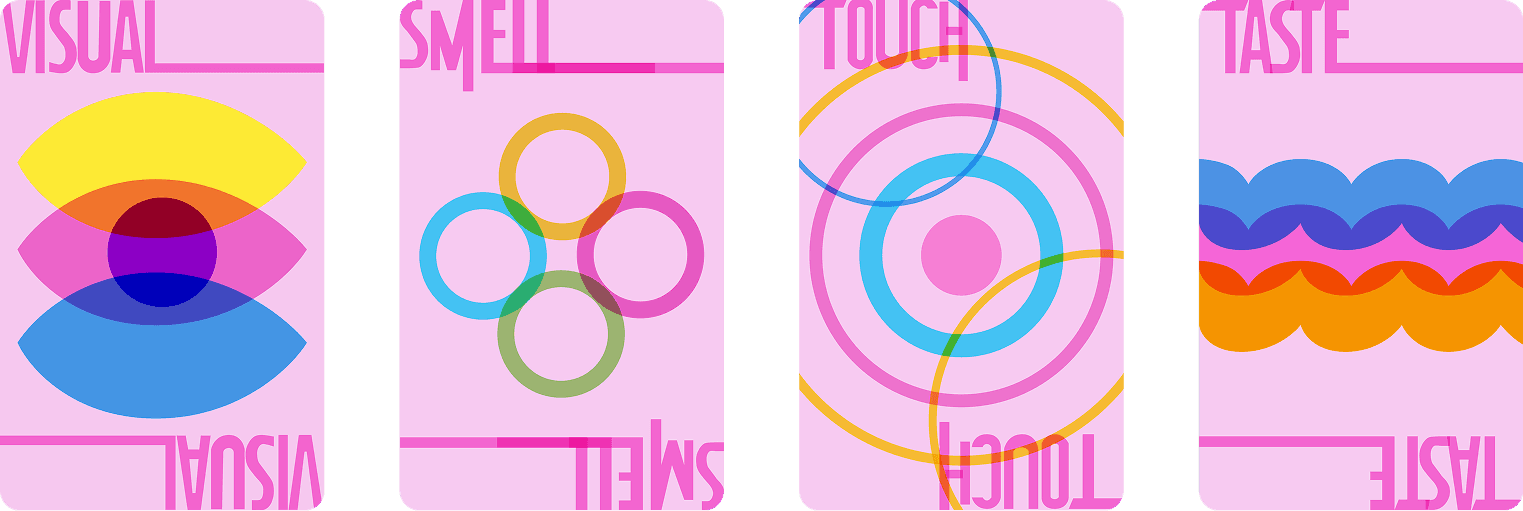
Every candy sits inside an identical opaque box. On your turn you may spend one sensory card — Visual, Touch, Taste, or Smell — to inspect a candy privately, then decide whether to keep it. What you learn is never revealed to the other players.
This is the rule the rest of the game hangs off. It turns a match-three loop into a bluffing loop, and it makes the four senses worth different amounts depending on what is still on the board: Visual is strongest early, Touch and Taste hold their value, Smell is the gamble.
Spend no sensory card and you must take the candy blind. Skipping the inspection is not a free action, it is the risk.
02 / Win condition
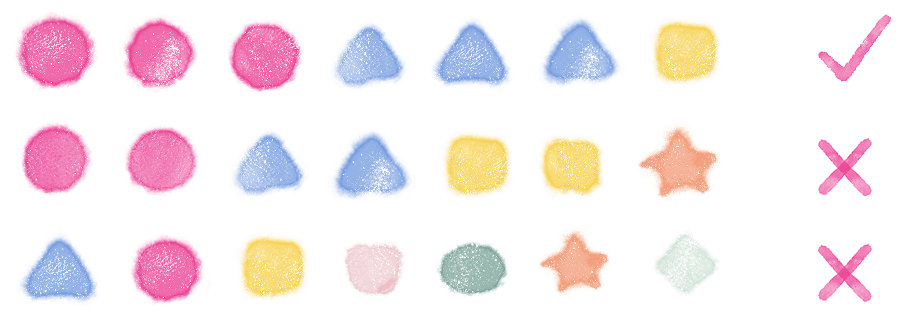
Each player holds a candy jar with seven slots. Three identical candies clear out of the jar and score a point plus a reward card. Fill all seven with nothing left to clear and you are out for overindulgence.
The cap is what makes a blind draw dangerous. On slot two a bad guess costs nothing; on slot five it can end your game. So the sensory cards get more valuable at exactly the point in the round where they are hardest to spare.

03 / Player interaction
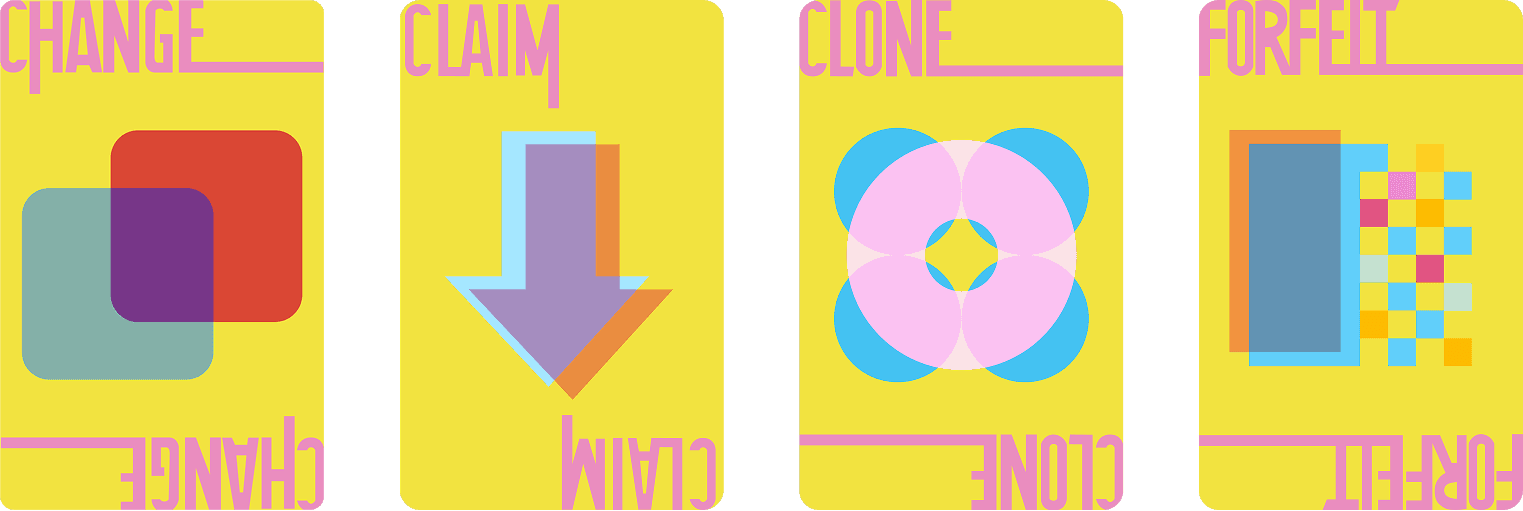
Change swaps a candy in your jar with another player's. Claim draws a random card out of someone's hand. Clone duplicates a candy you already hold. Forfeit discards one. They are played first in a turn, and you may play as many as you like.
Round-two testers said the same thing three different ways: the game was fun but solitary. Three of the four abilities only do anything by reaching into another player's game, which is the entire point of adding them.
Iteration
The first version was strategically fine and thematically pointless. The second fixed the theme and broke the table. The third is the one in the box.
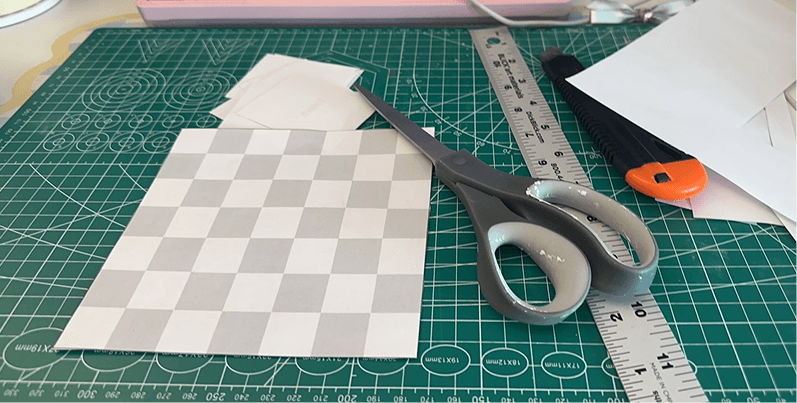
Round 01
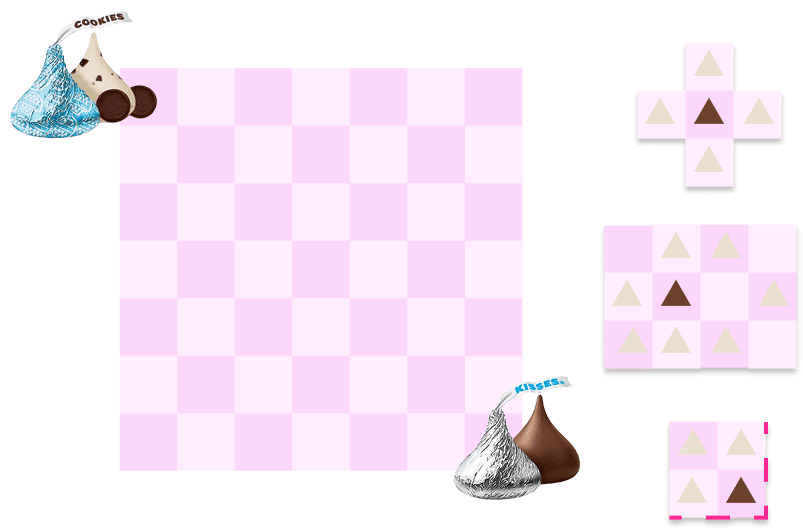
Two players place candies on a grid and try to surround each other. Surround an opponent’s piece and you eat it. The player holding the most candy when the moves run out wins.
Round 02
Candies are hidden in the cells of a grid. Players pick blind, and three of a kind can be eaten. Sensory cards let you inspect a candy before committing, and holding more than seven loses the game.
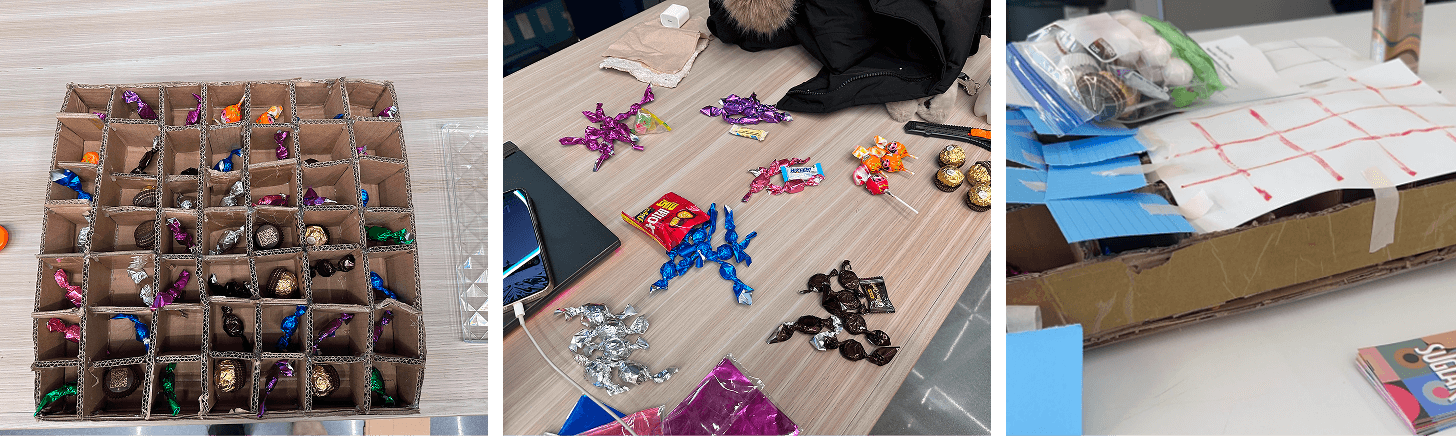
Final
Round two kept its core and gained the three things it was missing: ability cards, so a turn can reach into someone else’s game; a judge, who runs the sequence and returns eliminated candy to the board; and a printed instruction sheet, so the order of a turn is never argued about mid-game.
Visual System
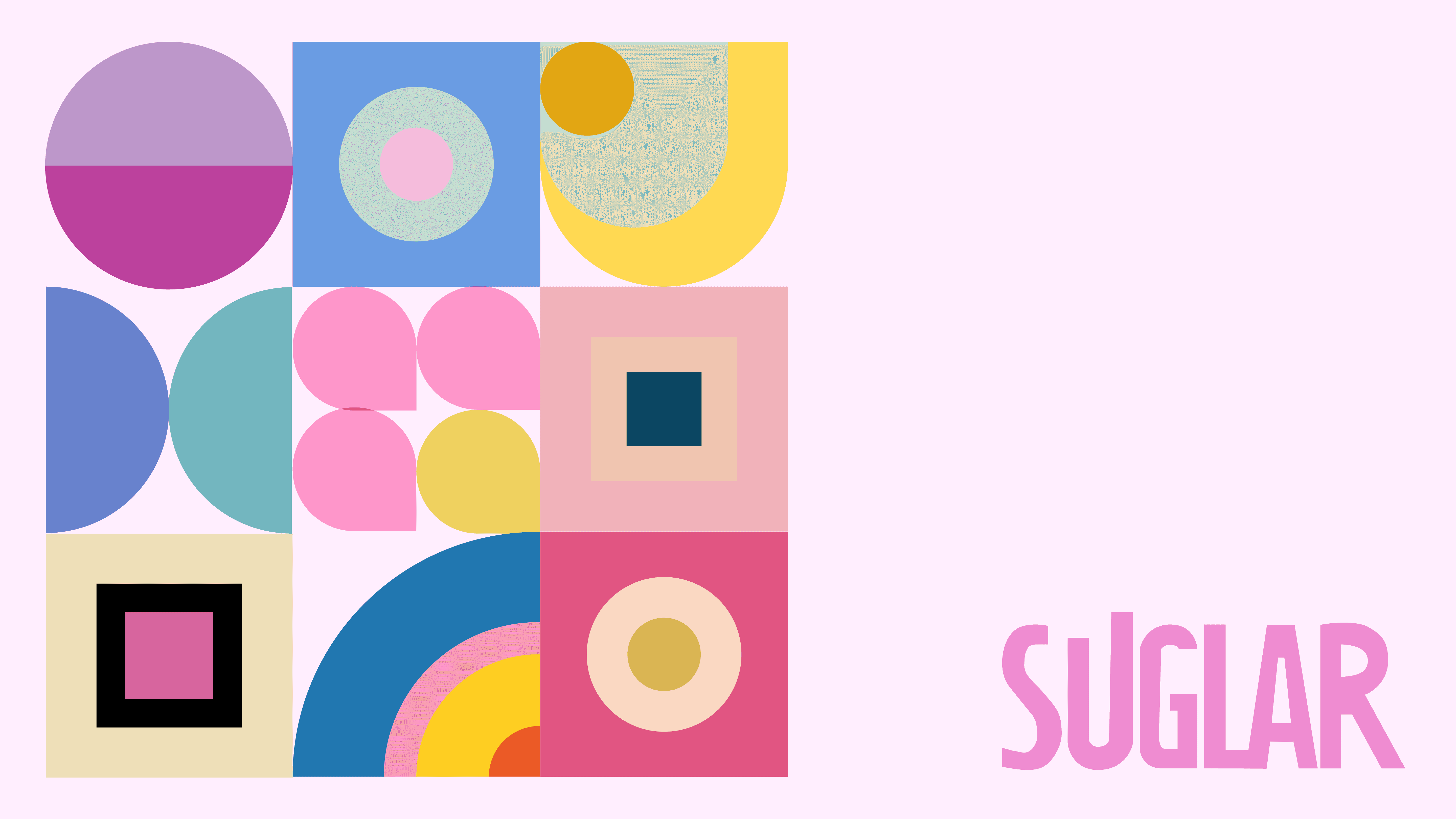
Cards, box, sleeve, and instruction sheet are all drawn from the same four primitives and the same sampled candy palette, so the components read as one set without matching each other exactly.
A condensed display cut with a periwinkle duplicate slipped behind it. The offset does the work a gloss or a bevel would normally do — it reads as sugar-coated without a single gradient.
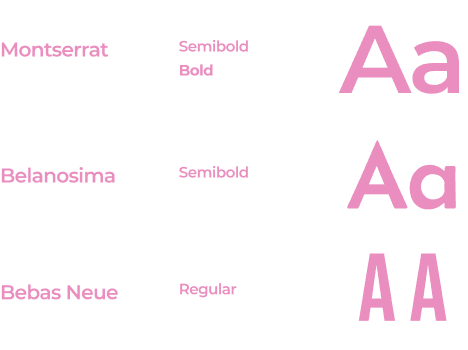
Type underneath it stays plain on purpose: Bebas Neue Regular for display, Belanosima Semibold for card labels, Montserrat Semibold and Bold for anything a player has to read while holding candy in the other hand.


Sampled off wrappers rather than picked in a color wheel: lemon-drop yellows, wrapper-foil blues, a ground the pale pink of a sugar coating.
Five of them run across the box, the board, and every card. The other thirteen stay local - Bubblegum on sensory cards, Lemon on ability cards, the rest inside the illustration.
Core · On every component
Sugar white
Ground
#FFEEFE
Suglar pink
Wordmark
#E15582
Cornflower
Board blue
#6A9CE3
Mint
Board green
#C4DDD1
Charcoal
Type & rules
#2F3237
Supporting · Card fills and candy accents
Bubblegum
#EF8CD1
Lemon
#FFD952
Periwinkle
#C6C8F3
Hot pink
#FD2894
Blush
#F1B2BA
Amber
#E1A210
Orange
#F18C0D
Caramel
#D47E4B
Cream
#EEDFB8
Sage
#6FA195
Teal
#73B6BF
Sea blue
#2177B0
Ink
#1C0B64
Every tile in the pattern is one of four primitives nested inside a square, and every overlap is a flat transparency rather than a new color. It scales from a 12mm card corner to the full box wrap without redrawing anything.

Results
Playtesters scored the finished game on six measures and wrote a comment each. The scores split cleanly: everything about the concept landed, everything about running a four-player table did not.
“Finding and eating my favorite candies feels great. However, I think adding more skill cards might enhance the interaction between the game and the players.”
“I really love the artistic design of this game; the visuals are fantastic. However, the card texture could be improved — consider using more professional printing next time.”
“Candy brings joy. Incorporating multiple senses is very interesting, and this is my first time playing such a game. However, I find it difficult to distinguish scents.”
Reflection
Limitation
Smell is the weakest of the four senses in play. Wrapped supermarket candy barely smells of anything, so the Smell card is the least-used card in the deck — the mechanic is sound, the component choice undercut it.
Key tradeoff
Real candy is what makes the game memorable and what makes it impossible to ship. Every session eats its own components. I chose the experience over the product, which is the right call for a studio brief and the wrong one for a shelf.
Next validation
Print the cards properly and run four strangers through a full round without me at the table. Fluency scored 3/5 and I still cannot tell whether that was the rules or the judge’s pacing.